


Vertical Ladder Stanchion Systems
Vertical Ladder Safety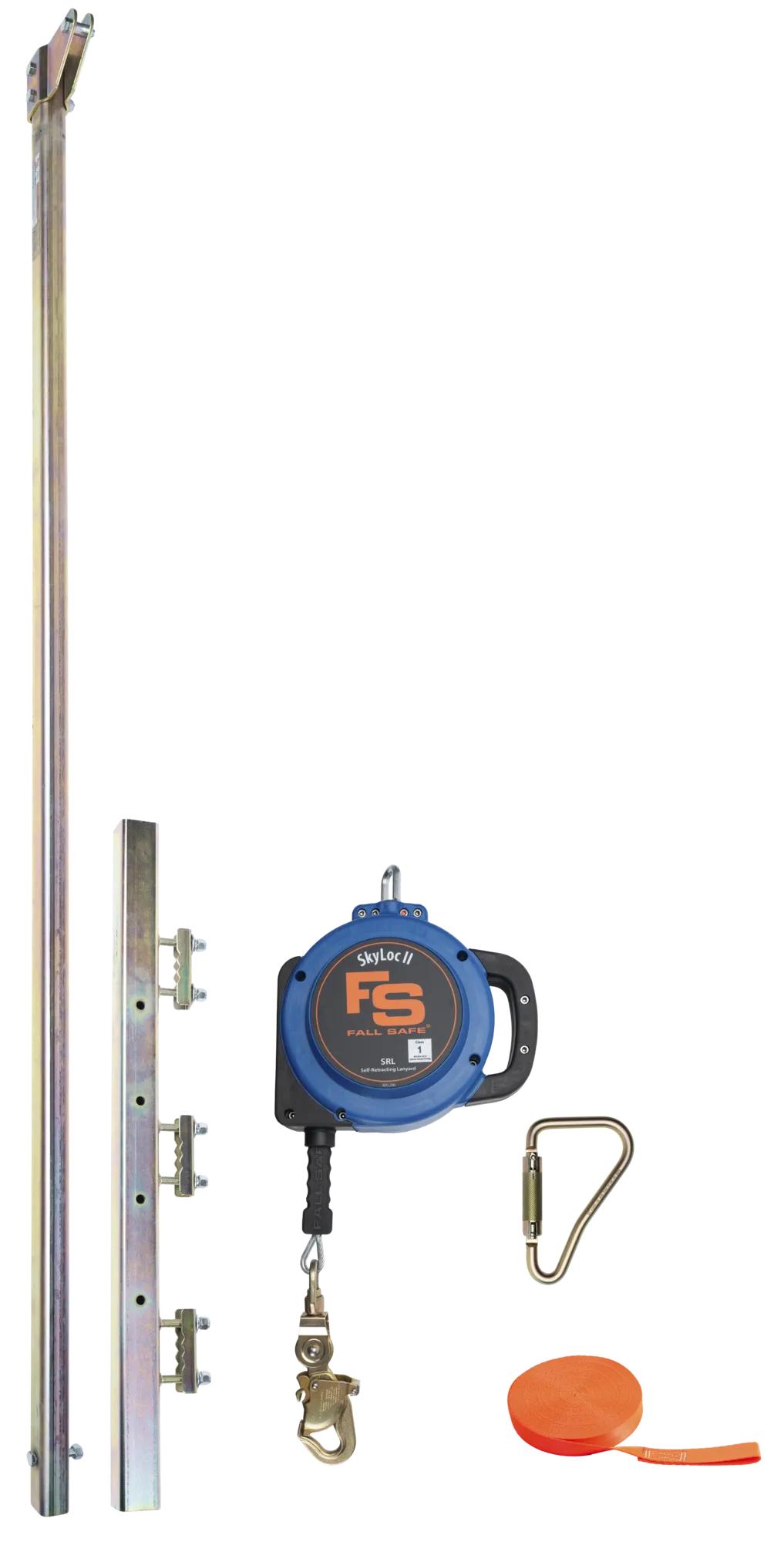
The Vertical Ladder Stanchion provides a quick, easy, practical method for providing a fall protection anchor for workers who must climb an OSHA standard ladder. The Stanchion quickly connects to ladder rungs and provides a standard anchor point to which an SRL can be attached. The Stanchion is an ideal replacement for ladder cages, and its zinc plated steel construction is designed to withstand the harshest of environments.
- Overhead anchorages coupled with the Reliance Skyloc II SRL means arrest distances less than 24in
- System user training is much easier than other complex ladder safety systems
- Kits available in 30ft, 50ft, and 100ft lengths
- Use your existing fleet of self-retracting lanyards or convert to the high performing Skyloc II
Available Variations & Documents
- Warranty
- 1 Year Limited Commercial Warranty
- Standards
- OSHA 1926.502
- Total Weight Capacity (kg.)
- 140
- Total Weight Capacity (lb.)
- 310
- System Length (ft)
- 100
- Warranty
- 1 Year Limited Commercial Warranty
- Standards
- OSHA 1926.502
- Total Weight Capacity (kg.)
- 140
- Total Weight Capacity (lb.)
- 310
- System Length (ft)
- 30
- Warranty
- 1 Year Limited Commercial Warranty
- Standards
- OSHA 1926.502
- Total Weight Capacity (kg.)
- 140
- Total Weight Capacity (lb.)
- 310
- System Length (ft)
- 50
Frequently Asked Questions
Up to 4 workers, depending on the system's span and the connecting devices used. Some configurations are limited to 2. Check the Skyline technical bulletins or contact Fall Safe technical services to confirm the capacity for your layout.
Yes. Skyline horizontal lifelines should be installed by trained personnel, and Fall Safe offers Skyline training classes. OSHA also requires horizontal lifelines to be designed, installed and used under the supervision of a qualified person, as part of a complete system with a safety factor of at least two (29 CFR 1926.502(d)(8)).
At least once a year, by a competent person trained in Skyline inspection. Users should also inspect the system before each use. Any system that has arrested a fall must be removed from service until a competent person inspects it.
At least once a year, by a competent person trained in ARFAS rigid rail inspection. Users should also inspect the system before each use. Any system that has arrested a fall must be removed from service until a competent person inspects it.
A rigid rail doesn't deflect in a fall, so the fall clearance you need depends mainly on the connecting device, such as an SRL. A cable horizontal lifeline sags under load, which usually adds to the clearance required. That makes rigid rails a good fit where clearance below the work area is limited.
The ARFAS is built from a small set of simple components, which allows a wide range of mounting options. Multiple rails can be connected to cover larger work areas, and its lightweight design is intended to make installation faster and less costly.
When the ARFAS is installed overhead and paired with a Fall Safe FLO or Skyloc II SRL, arrest distances can be less than 24 in. The system is designed for permanent installation indoors or outdoors in a wide range of environments.
Unsure what gear is right for your needs?
Our experienced team of Fall Safety experts can help.